SHISHIRA RITU - WINTER ISSUE NO. 125 (Jan-Feb 2026)

“From the perspective of evolutionary theories, nineteenth-century anthropologists saw menstrual rituals as relics of an earlier ‘mother-goddess cult’, prevalent across pre-Vedic India. Though problematic, this view underscores the deep chronological roots of fertility symbolism in Eastern India’s ritual landscape.” - Nandini Sahu (pic) in “Menstrual Myth, Ritual Embodiment and Regional Cosmology in Kamakhya and Raja Paraba.” (FEATURE ON FOLKLORE)
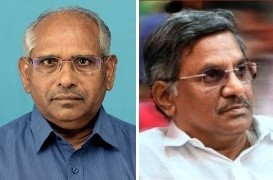
“Draupadi, chief heroine of the [Mahabharata], was deified, merged with the Mother Goddess, and made a guardian deity of many villages in North–Eastern Tamil Nadu. … Hiltebeitel argued that, though Draupadi Amman worship is part of folk worship, it belongs to Hinduism.” Karunanithi Gopalakrishnan & A Chellaperumal (pic), in their article on ‘Therukkoothu’. (FEATURE ON FOLKLORE)

The World of Feluda - Investigating The Architectonics of Satyajit Ray’s Popular Detective Series by Shreya Ghosh
In fact, Feluda blends the best of two worlds. He was modern, aware of the world around him and at the same time deeply rooted in his culture. His role as an ideal Bengali bhadralok, his charismatic personality, his manliness- all these indeed suggest the privileging of the ‘male subject’ when examined under the notion of ‘gender performativity’. (LITERARY SECTION)

In Conversation with Ashwin Singh by Shubhanku Kochar and Prachi Behrani
My Indian roots have significantly shaped my cultural identity in terms of spirituality (a strong belief in the philosophies of the Vedic Seers), culinary traditions, music, dance, and various rituals. I live in what could still be described as a predominantly Indian area (this is due to the legacy of geographic Apartheid) and therefore, I write a fair amount about this community. (LITERARY SECTION)

Isn’t it unusual that a couple appeals to have a child through the natural process? Are we heading towards such a weird future? Junaid Jazib’s The Return of Oxytocin addresses the current situation in the high-tech era in which we live. (FICTION)

Swati Amar’s The Bulbul's Song is a contemporary piece that portrays that the definition of love is not the same for all, while all follow the normal route, others differ in thoughts and actions. It is about how two souls unite, defying the world with courage. (FICTION)
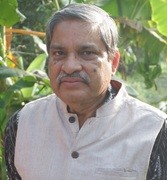
Aswini Kumar Mishra’s poems offer a quiet, philosophical lens on life. They invite the reader to pause, to consider what living truly entails, and to reflect on how one moves through an ever-changing world. (POETRY)
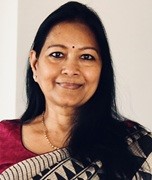
Vinita Agarwal’s poems bring a breath of fresh air, weaving the delicate strands of nature into the fabric of lived experience and illuminating the inextricable link between human life and the natural world. (POETRY)

‘Shah Rukh Khan and the Railway Narratives’ (Non-Fiction) by Ankur Konar, reviewed by Namrata Pathania (in the pic), demos that trains in SRK’s oeuvre consistently operate as symbolic structures through which the star negotiates emotion, identity, modernity, and national belonging… Equally interesting are the other 7 books including ‘Swansong’ (a collection of short stories) by Vandana Kumari Jena reviewed by Dilip K Das. (BOOK REVIEWS)
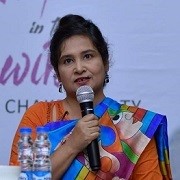
‘Bandaged Moments’—an anthology of 26 short stories by women authors from 17 Indian languages trans. into English, and ed. by Nabanita Sengupta & Nishi Pulugurtha—is a new leaf on the global gamut of feminist writing on mental health, says reviewer Sutanuka Ghosh Roy (in the pic)… Equally interesting are the other 7 books including ‘The Pearls of Dew’—a collection of short stories by Ambika Ananth (Telugu original), trans. by P Sri Rama Murthy— reviewed by Atreya Sarma U. (BOOK REVIEWS)
Past Issues
Issue:124:Contemporary Assamese Writing
Issue:123:Contemporary Indian English Novel
Issue:122:Adivasi Poetry
Issue:121:Punjabi Literature in Prospect
Issue:120:Kashmiri Literature Today
Issue:119:Film & Other Media Adaptations from Regional Literatures
Issue:118:The life & work of ‘Padma Shri’ Asavadi Prakasa Rao, a unique Telugu savant with subaltern roots
Issue:117:Westerners’ Encounters with Indian Philosophy and Spirituality